Handing Off a Medicine Kit to a Sitter or Grandparent
A plain checklist for handing a prescribed medicine kit to a sitter, grandparent, or coach, so everyone knows who has it today and where it is.
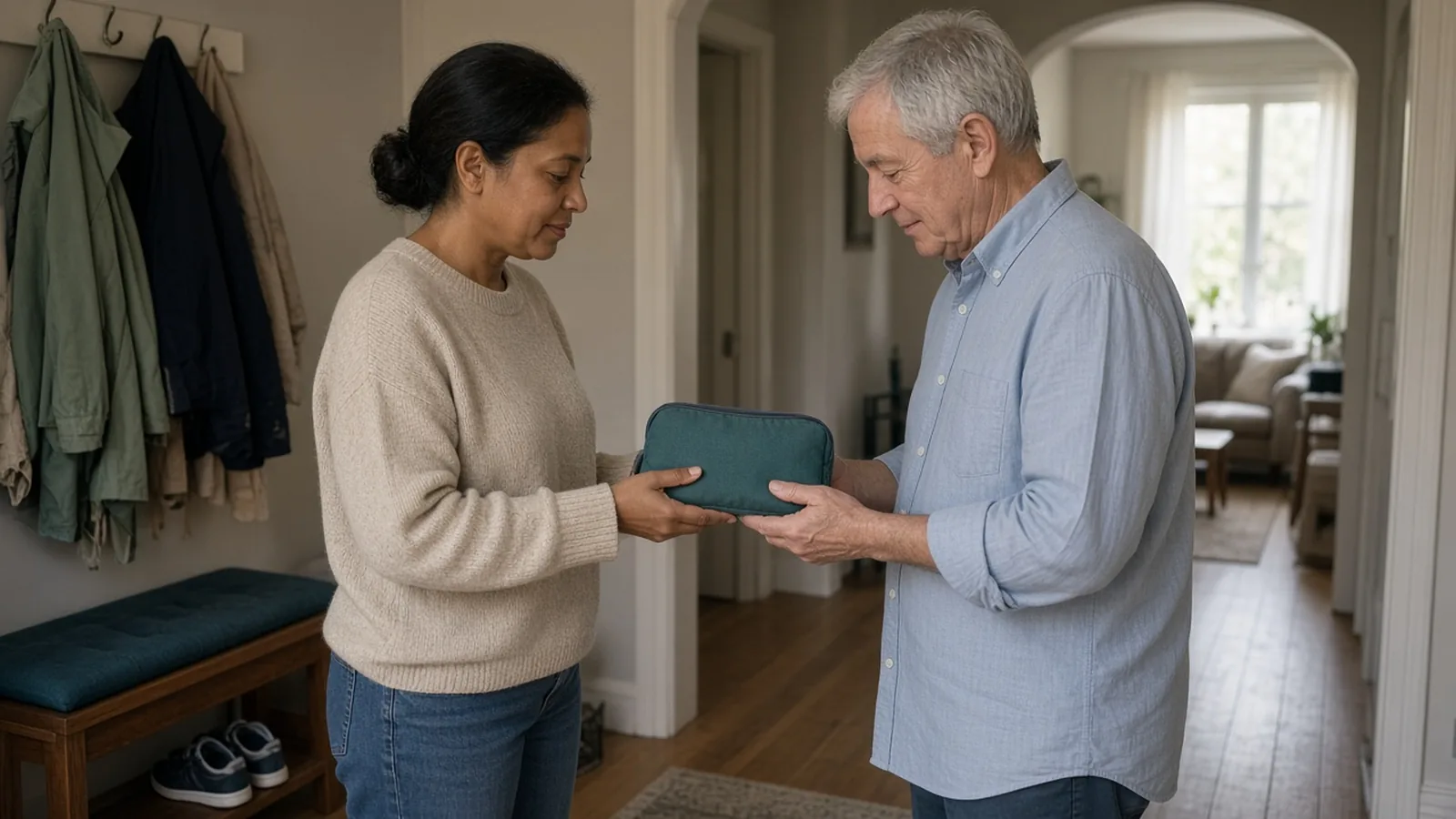
Most kits do not get forgotten at home. They get forgotten in the handoff.
You pack the bag. You know it is by the door. Then Grandma pulls into the driveway, the kids pile into her car, and the bag is still on the bench. Or the coach takes the team to the field, and the kit stays in your trunk. Nobody did anything wrong. Everyone just assumed someone else had it.
If your child carries prescribed medicine, like an epinephrine auto-injector, an inhaler, insulin and glucagon, or a seizure rescue medication, the handoff is the moment that matters most. Here is a simple way to make it clear, every time.
Start with the written plan, not your memory
Before you think about the bag, think about the paper. Health groups are clear that the written plan from your child's doctor is the thing other adults should follow.
The American Academy of Pediatrics says its written allergy and anaphylaxis emergency plan is meant to equip "nurses, teachers, coaches, parents, relatives, babysitters and others" who care for your child when you are not there (HealthyChildren.org, AAP). FARE suggests keeping its care plan "in a place where others can find it" (FARE).
The same idea shows up for other needs:
- Asthma: The Asthma and Allergy Foundation of America notes that a written Asthma Action Plan also tells teachers, school nurses, and after-school staff about your child's asthma (AAFA).
- Seizures: The Epilepsy Foundation suggests making copies of a seizure action plan and giving one to the people who are with you most often (Epilepsy Foundation).
- Diabetes: The American Diabetes Association describes a Diabetes Medical Management Plan as the basis for school plans (ADA).
This post is not about what is in that plan. That is between you and your child's doctor. It is about getting the plan and the kit into the right hands, together.
Tip: Put a copy of the plan inside the kit itself. Then the paper travels with the medicine, not in a folder at home.
Meet before the first drop-off
A handoff in the driveway is a bad time to explain anything. Kids With Food Allergies, a program of AAFA, suggests meeting a new sitter before their first day, at a time when you will not be rushed (Kids With Food Allergies). Their list includes showing the sitter what your medicine pack looks like and where you keep it, and going over your emergency contacts. If your child's medicine came with a trainer device, they suggest letting the sitter practice with it.
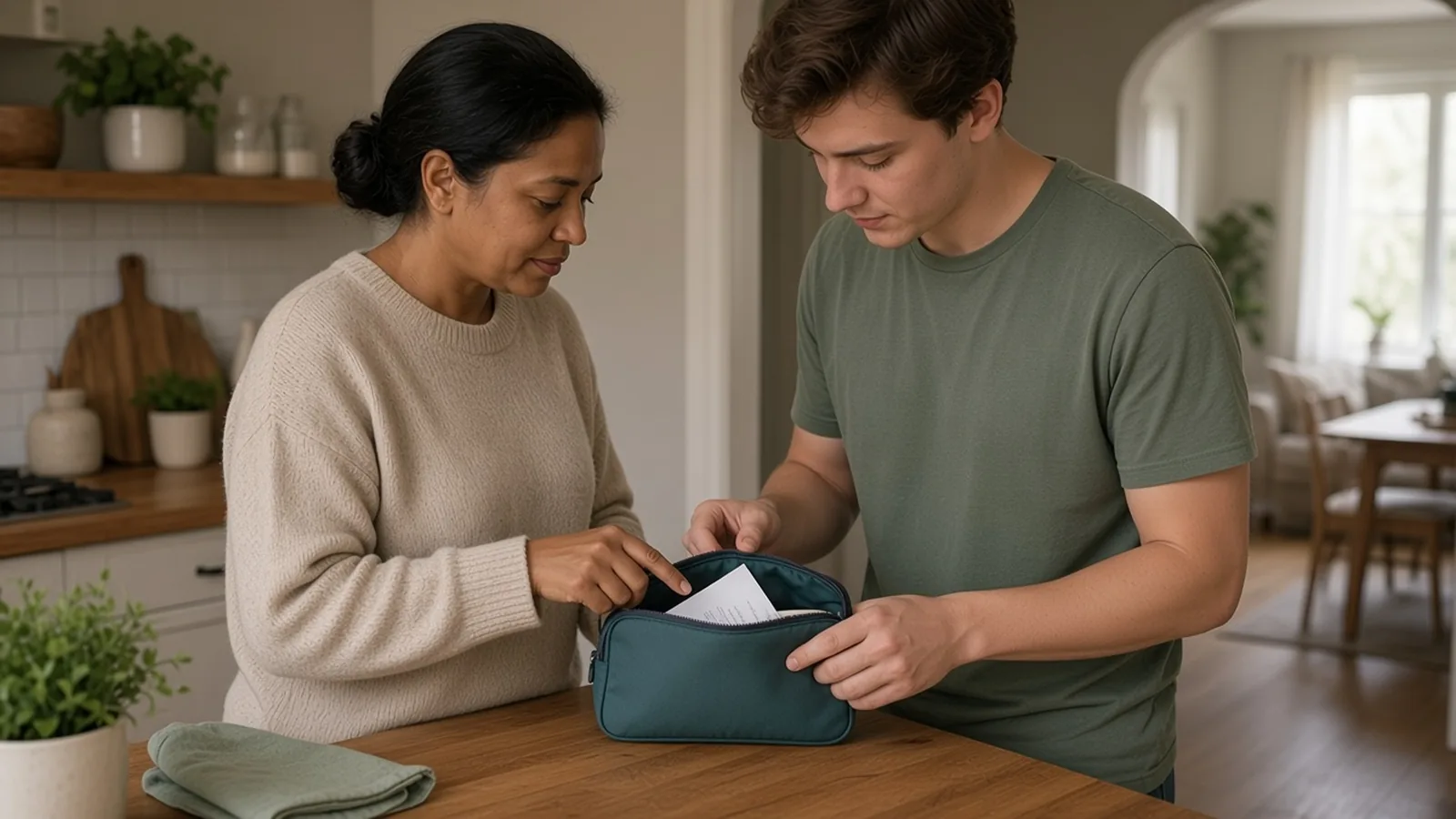
That first visit is also the time to cover the boring logistics:
- What the bag looks like. Color, zipper, any tag or patch.
- Where it lives in your home, and where it rides in the car.
- What is inside, at a glance. Not instructions, just "two of these, one copy of the plan, phone numbers card."
- Who to call first, second, and third.
Grandparents and longtime sitters deserve this visit too. Bags change. Medicine changes. A five-minute refresher each school year is easier than assuming.
Make the handoff a sentence, not a vibe
The weakest handoff is silence. The bag sits near the kids, and everyone figures it is covered.
A stronger handoff has three parts, said out loud:
- "Here is the kit." Hand the bag to the adult, not to the child and not to the car seat.
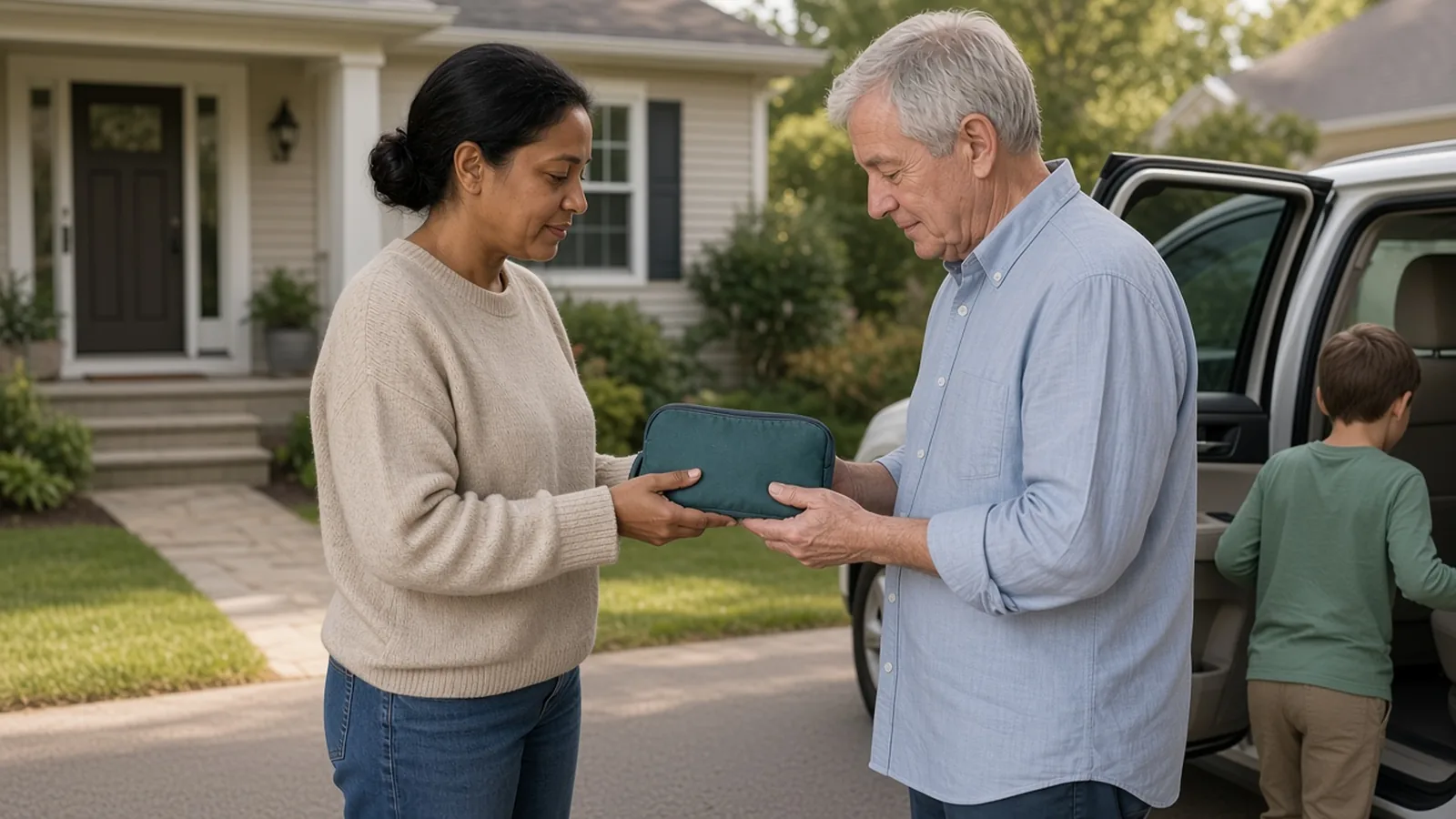
- "It goes where they go." Name the plan for the day: park, practice, lunch out. The kit goes to each one.
- "Text me when you have it back with you." Or whatever check fits your family.
It can feel stiff the first few times. That is fine. A sentence you say every time becomes a habit for both of you, and it removes the guessing.
Watch the in-between moments
Most leave-behinds happen during transitions, not during the main event. Think about where the kit sits during:
- Car swaps. Moving car seats from one car to another is a classic moment for a bag to stay behind.
- Bathroom and snack stops. The bag gets set down on a bench or a counter.
- Pickup lines. A coach or teacher hands off the child but not the bag.
- Changing activities. Practice ends, the team goes for pizza, and the kit stays in the equipment bag at the field.
For each one, decide in advance who carries the kit. "Whoever is driving" is a clear rule. "Whoever remembers" is not.
Coaches, teachers, and other adults with a crowd
A coach or teacher is watching many kids, not just yours. Make it easy for them.
- Use a bag that stands out. A bright color is easier to spot in a pile of backpacks.
- Put your child's name and a contact number on the outside.
- For school-sponsored trips and events, ask the school how medicine travels. The ADA's Safe at School pages note that diabetes care needs extend to field trips and extracurricular activities (ADA Safe at School), and the CDC encourages schools and out-of-school programs to have written food allergy plans (CDC).
- Ask one simple question: "Who on your staff has the kit during the game or the trip?" Get a name.
Bring your child into it
Even young kids can learn to ask, "Who has my kit?" The Epilepsy Foundation suggests making sure your child knows when you share their plan with a school or camp, and that they are part of the process (Epilepsy Foundation).
A child who expects the handoff will often notice when it does not happen. That is one more set of eyes on the bag.
The end-of-day check
The handoff back matters as much as the first one. When you pick your child up, ask the same short question: "Where is the kit?" Then look at it.
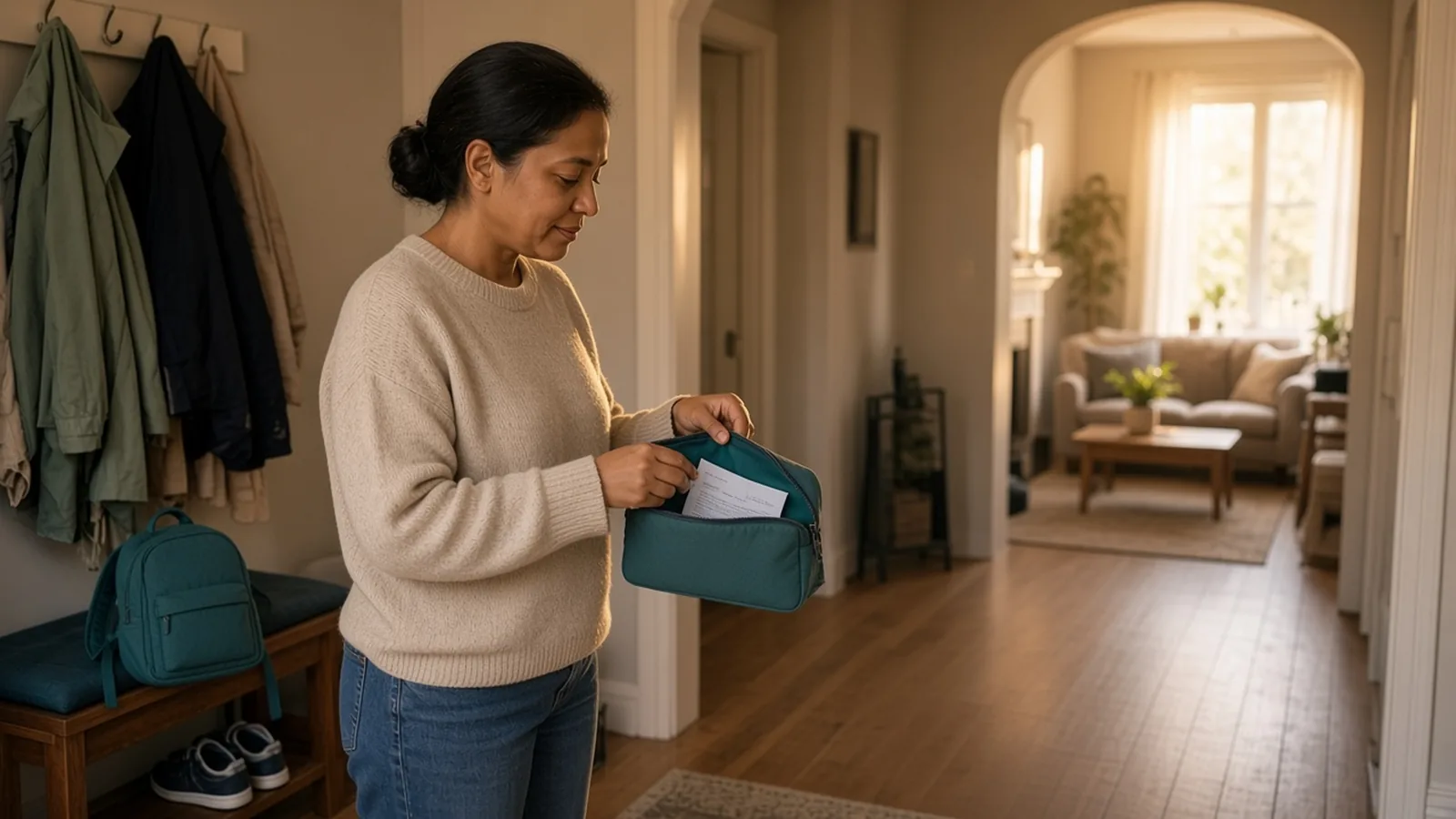
Check that the bag is there, that it is the right bag, and that nothing is obviously missing compared with what you packed. If anything was used or opened, follow your child's written plan and talk with their doctor about next steps.
A quick handoff checklist
Print this or keep it on your phone:
- Copy of the written plan is inside the kit.
- Caregiver has seen the bag and knows where it lives.
- Emergency contacts are written down, inside the bag and on the fridge.
- Kit is handed adult to adult, out loud.
- Each car swap and activity change has a named carrier.
- End-of-day check: kit is back and looks the way you packed it.
One more option
If you want a second nudge during the busiest handoffs, WithKit's Hand off lets you show a kit QR that Grandma or a teacher scans, good for today only, so the adult who has your child that day hears the leave-behind alert.
This article shares general logistics tips. It is not medical advice. WithKit is not a medical device. Always follow your child's written plan and their clinician's instructions.
Sources
- American Academy of Pediatrics, HealthyChildren.org: Create an Allergy and Anaphylaxis Emergency Plan for Your Child
- FARE: Food Allergy & Anaphylaxis Emergency Care Plan
- Asthma and Allergy Foundation of America: Asthma Action Plan
- Epilepsy Foundation: Seizure Action Plans
- American Diabetes Association: Written Care Plans
- American Diabetes Association: Safe at School
- Kids With Food Allergies (AAFA): Babysitters and Caregivers: Food Allergy Plan and Form
- CDC: Food Allergies in Schools