Flying With Prescribed Medicine: TSA Rules in Plain Terms
What TSA says about carrying epinephrine, inhalers, insulin, and other prescribed medicine through airport security, with tips for packing the kit.
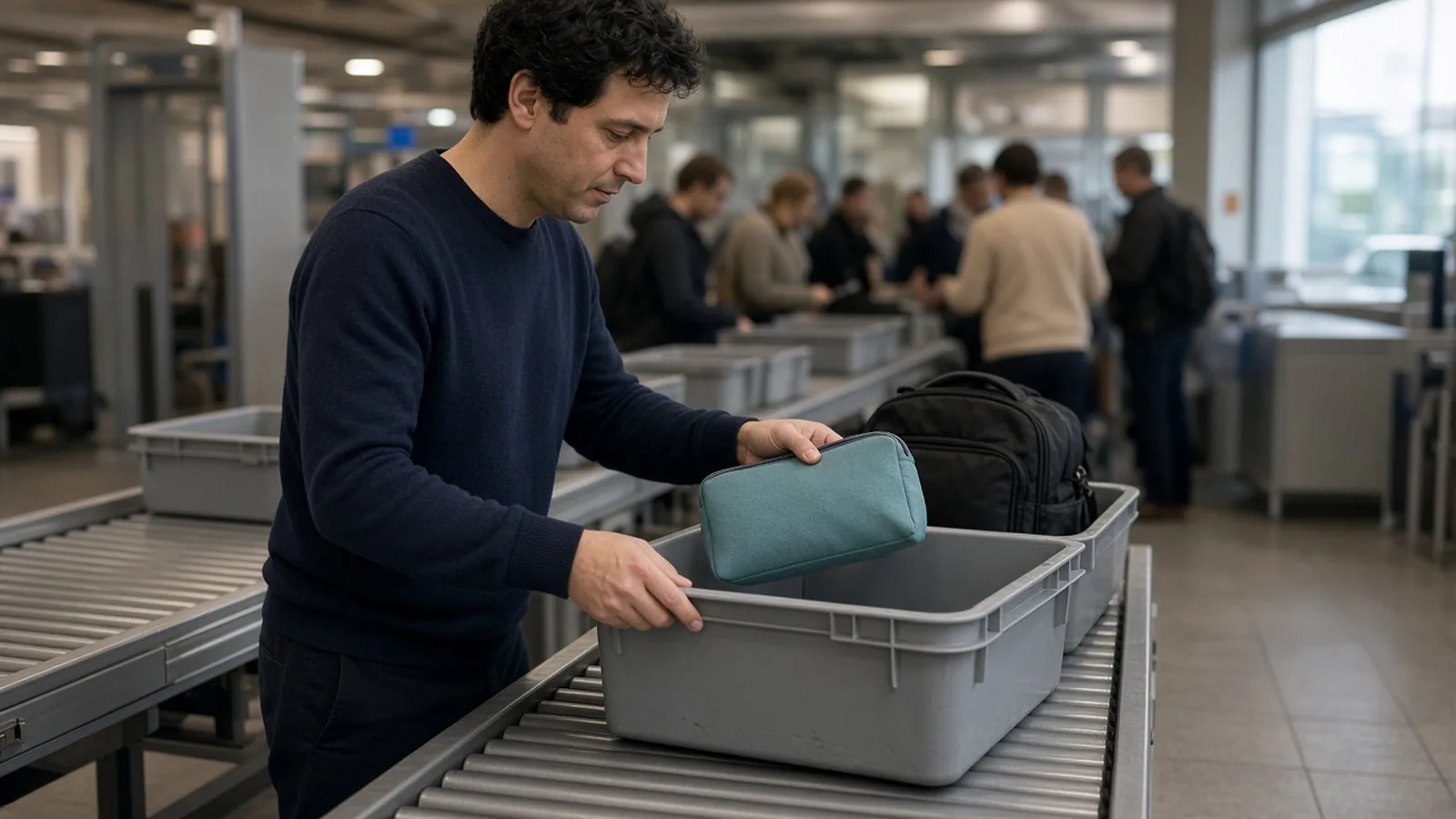
The airport is where a well-packed kit gets tested. Bags get pulled apart at security, shoved under seats, and handed between adults at the gate. If someone in your family carries an epinephrine auto-injector, an inhaler, insulin, or another rescue medication, it helps to know the rules before you are standing at the bins.
Here is what the Transportation Security Administration (TSA) and a few health groups say, plus packing habits that help. Rules change, so check the linked pages before each trip.
The short version
- Prescribed medicine can come in your carry-on. TSA's medical list shows medications, inhalers, insulin, and epinephrine auto-injectors as allowed in carry-on and checked bags (TSA: Medical).
- Medically necessary liquids can be larger than the usual 3.4 ounce limit, in reasonable quantities, but you must tell the officer (TSA: Medications (Liquid)).
- Take medicine out and screen it in its own bin (TSA: Disabilities and Medical Conditions).
- The officer makes the final call on what goes through. TSA says this on every item page.
The 3.4 ounce rule, and why medicine is different
Most travelers know the liquids rule: travel-size containers of 3.4 ounces (100 milliliters) or less, in one quart-size bag. TSA lists medications as an exemption to that rule (TSA: Liquids, Aerosols, and Gels Rule).
The catch is the word "declare." TSA says it allows larger amounts of medically necessary liquids, gels, and aerosols "in reasonable quantities for your trip, but you must declare them to TSA officers at the checkpoint for inspection" (TSA). Declaring just means telling the officer before screening starts.
At the checkpoint, step by step
TSA's guidance for medically necessary items boils down to a few moves (TSA: Disabilities and Medical Conditions):
- Tell the officer first. Before screening begins, say that you have medically necessary liquids or medications. You can say it out loud, show the TSA Notification Card, or show medical documentation.
- Use a separate bin. Place the medicine in its own bin, along with related items like freezer packs, pumps, and syringes.
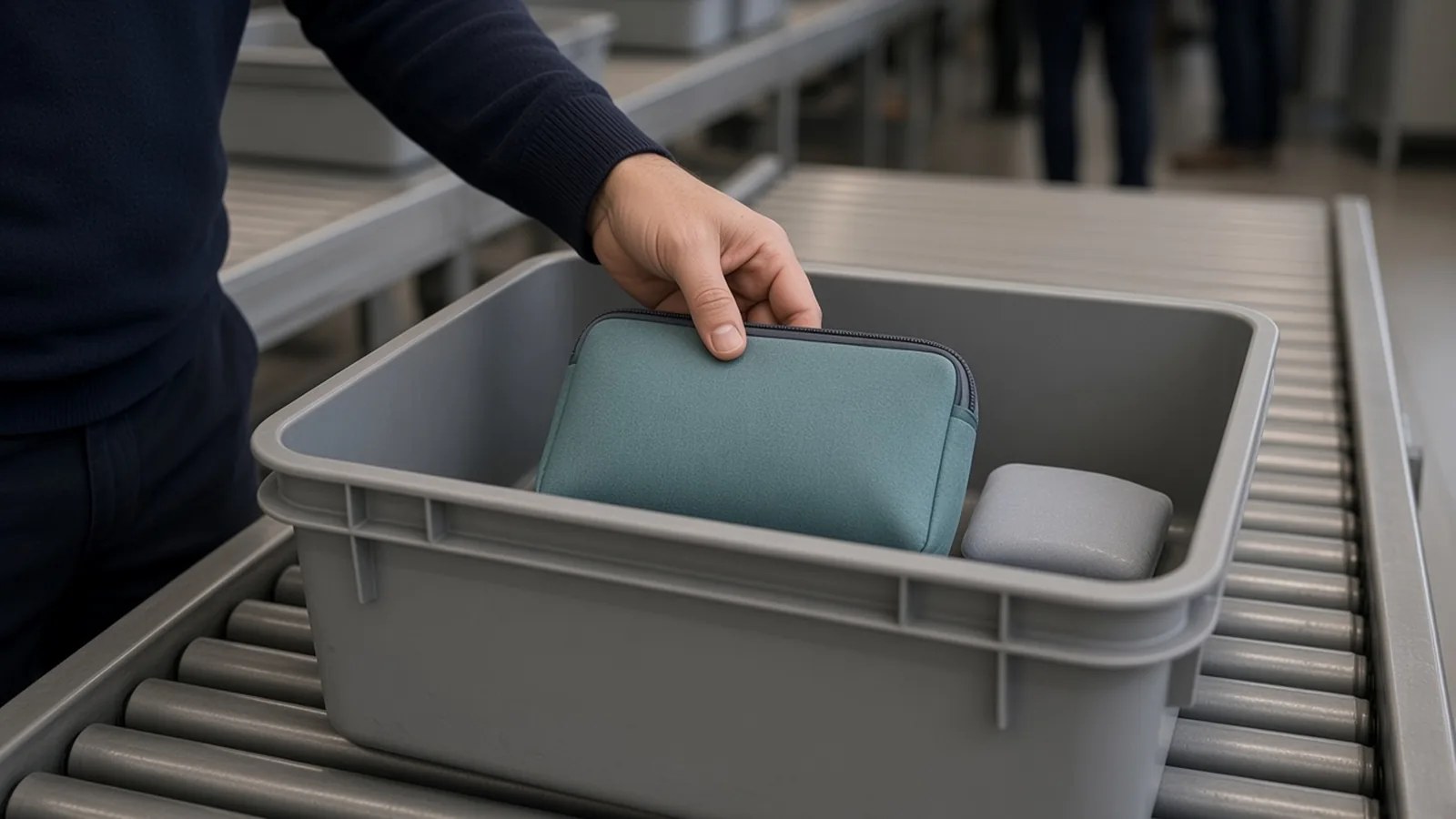
- Expect a closer look. Officers may test liquids, gels, or aerosols. If they cannot clear an item with screening technology, they may ask you to open it. TSA says screening will never include placing anything into the medically necessary liquid.
- Know your options. If you do not want your liquid medicine X-rayed or opened, tell the officer. TSA says it will take other steps to clear it, and the traveler or their guardian will get additional screening, which may include a pat-down.
For pills and other solid medicine, TSA says they must be screened and that clear labeling helps (TSA). For inhalers, TSA recommends labeling but does not require it (TSA: Inhalers).
Notes by type of kit
Epinephrine auto-injectors. TSA allows them in carry-on and checked bags (TSA: Medical). FARE goes further and says to keep epinephrine with you, not in checked luggage and not in the overhead bin. FARE also says its medical advisers recommend sending epinephrine through the X-ray machine rather than asking for a hand inspection, because hand inspections may raise the chance it gets accidentally activated, damaged, or lost (FARE: Traveling). FARE suggests carrying your emergency care plan with the medicine and being ready to show the printed pharmacy label.
Insulin and diabetes supplies. TSA asks you to tell officers about medically necessary liquids and place them in a bin separately for X-ray (TSA: Insulin). For blood sugar test kits, TSA asks you to tell the officer you have diabetes and are carrying supplies. It also says insulin pumps and supplies must be accompanied by insulin (TSA: Medical). If a device is worn on the body, tell the officer before screening begins.
Ice packs and cooling. TSA says ice packs, freezer packs, and gel packs used to keep medically necessary items cool can be frozen, partially frozen, or melted at the checkpoint (TSA). For how warm or cold a specific medicine can get, read its label and ask your pharmacist. The CDC notes that extreme temperatures can reduce the effectiveness of many medicines (CDC).
Packing the kit for a travel day
- Keep it in the carry-on, and keep it reachable. The CDC suggests packing medicine in a carry-on in case luggage is lost or delayed (CDC). A small pouch inside the backpack means you can pull it out at security in one move.
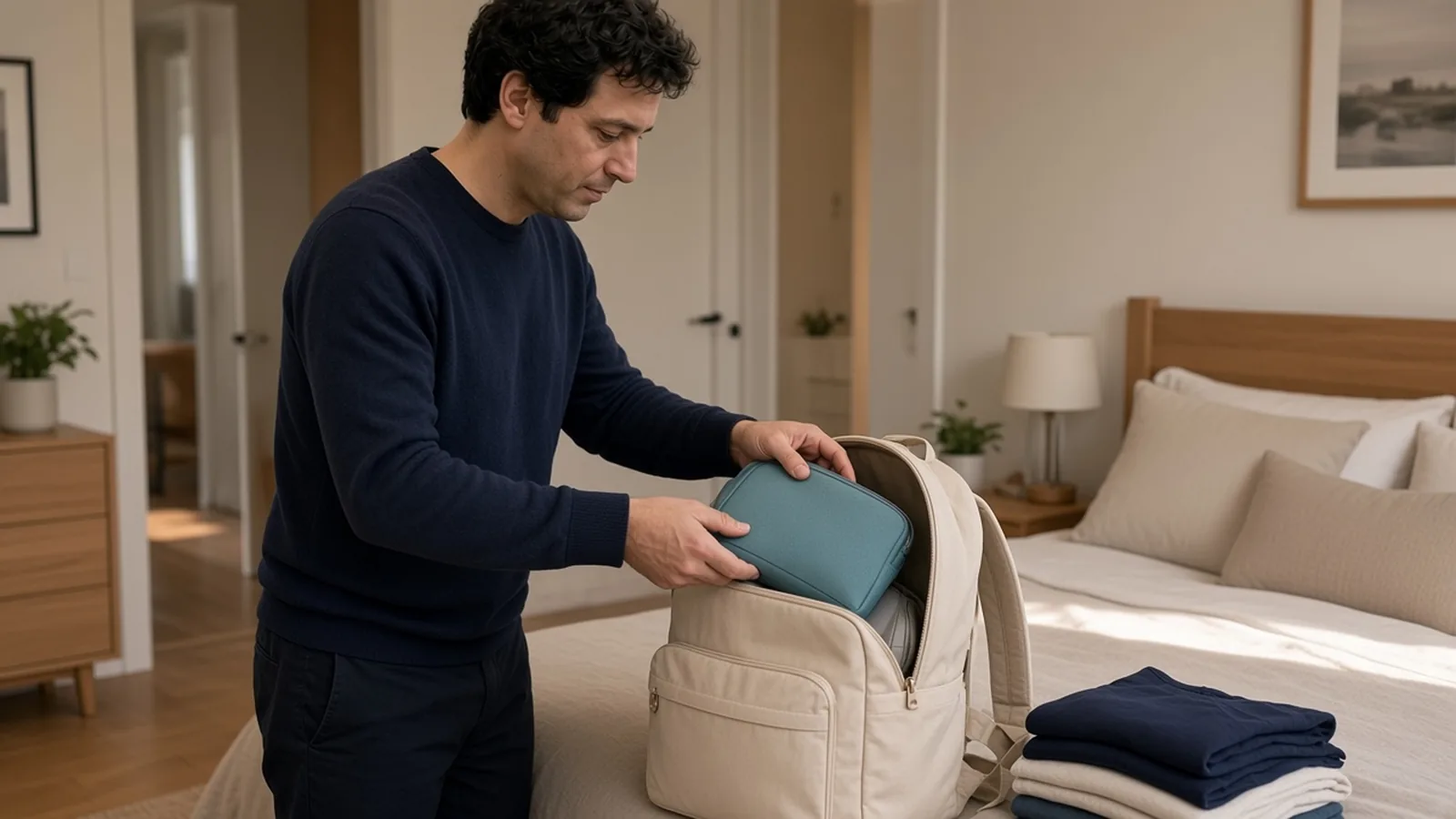
- Original labeled containers. The CDC recommends keeping medicine in its original labeled containers and bringing copies of written prescriptions.
- Pack for delays. The CDC suggests bringing enough for the whole trip plus extra in case of travel delays. Talk with your prescriber about how much that should be.
- Bring the plan. Put a copy of the written plan from your clinician inside the kit.
- Ask about a note. The CDC suggests asking your prescriber for a note if you carry injectable medicines (CDC). FARE also says a doctor's note can help (FARE).
The repack moment
Security is built to separate you from your things. Shoes, laptop, jacket, and the medicine pouch all go in different bins. Then you are rushing to put it all back while a line forms behind you.
That is a natural moment for a kit to stay on the conveyor or in a bin. A simple habit helps: the medicine pouch is the first thing you take out and the last thing you check before you walk away. Say it out loud if you are traveling with another adult: "I have the kit."
The same goes for the gate, the restroom, and the plane. Every time the bag comes off your shoulder, it has a chance to stay behind.
If you want help at security
TSA Cares offers a Passenger Support Specialist, a TSA officer with extra training, to help travelers with disabilities or medical conditions, including people traveling with medically necessary liquids over 3.4 ounces and families with a child who has a medical condition. TSA asks you to contact TSA Cares at least 72 hours before departure, using its online form or by calling (855) 787-2227. In TSA's words, it "does not exempt you from security screening" and "does not provide expedited screening" (TSA Passenger Support).
For a quick question about a specific item, TSA's Medical page lists AskTSA, including texting "Travel" to 275-872 (TSA: Medical).
Flying abroad
Other countries have their own medicine rules. The CDC suggests checking with the embassy of your destination, and of any country where you have a layover, to make sure your medicines are permitted (CDC). It also suggests seeing a provider at least 4 to 6 weeks before you leave.
A pre-flight checklist
- Medicine in original labeled containers, in a carry-on pouch.
- Copy of the written plan and prescriptions inside the kit.
- Extra supply for delays, as your prescriber suggests.
- Cooling packs if the label calls for them.
- Tell the officer, use a separate bin.
- Kit is first out at security and last checked before you walk away.
If you want a backup for the repack moment, WithKit can alert your phone when it walks away from the kit.
This article summarizes public TSA, CDC, and FARE guidance for travel logistics. It is not medical advice. WithKit is not a medical device. Follow your written plan, your medicine's label, and your clinician's instructions, and check TSA's site before you fly.
Sources
- TSA: Medical (What Can I Bring?)
- TSA: Medications (Liquid)
- TSA: Inhalers
- TSA: Insulin
- TSA: Liquids, Aerosols, and Gels Rule
- TSA: Disabilities and Medical Conditions
- TSA: Passenger Support (TSA Cares)
- CDC Travelers' Health: Traveling Abroad with Medicine
- FARE: Traveling